
Budget 2026: Martin Lewis' instant reaction and analysis – tax thresholds still frozen, cash ISA cut reversed, £100 energy bill help and more


The Chancellor John Healey has announced a raft of changes to taxes, energy bills, cash ISAs, and more in his first-ever Budget (on Wednesday 28 October). MoneySavingExpert.com founder Martin Lewis has shared his initial reaction and explained what the changes mean for you.
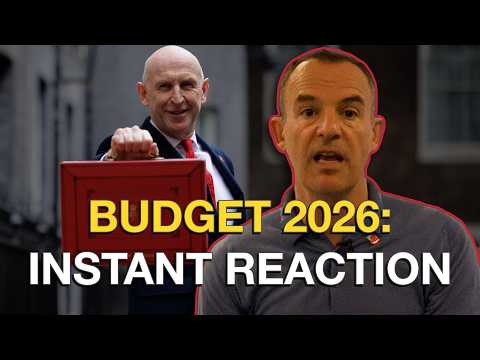

Read the full video transcript
Martin Lewis: "OK, the Chancellor's just sat down after doing his Budget, and I want to give you my instant summary of the consumer finance impact of that. None of the politics – just what it means practically. We'll be going through energy bills, including the £100 payout that's just been announced. Houses, first-time buyers, tax, savings, ISAs, investment, fuel, Carer's Allowance, mileage rates and a lot more.
"But let's start with what wasn't in the Budget. It's the biggest single tax rise we've had for years and it's carrying on – it's called fiscal drag. It's the fact that all the tax thresholds – the income tax thresholds – are frozen. So, as your earnings go up due to inflation and average earnings, more of your earnings will pay tax. That's what fiscal drag is, the biggest revenue raiser – and that isn't changing. It looks like it's staying for another few years.
"Even worse, if you are repaying a 'Plan 2' student loan: Rachel Reeves announced last year that the student loan repayment threshold on 'Plan 2' would be frozen from April 2027 until 2030. No change on that either, so you have double fiscal drag. As your earnings go up, and the repayment threshold is frozen, effectively you're going to have to pay more on your student loans.
"Many of you will know I have campaigned vociferously about that. I believe it's a breach of natural justice to effectively, retrospectively, morally change a contract that 18-year-olds signed up to with the Government, and now they're changing the terms. But nothing's happened on that one.
"OK, let's go into some of the other things. On energy: I've already done a video today on the fact that from next year, Standing Charges on gas will be scrapped, and instead the cost will be moved onto the unit rate. I think it'll be less than a penny per kilowatt hour, put on to the unit rate of gas – which means lower users will pay less, higher users will pay more.
"But ultimately, and I've been campaigning on this one – I was in to see the Chancellor on it this morning. That's a big win, because it means the more you use, the more you pay, the less you use, the less you pay. It's a much simpler system. They're looking to do it on electricity, too.
"But the big news on energy is in January, if you live in a household that pays Council Tax band A-D, your house will get £100 of energy support paid to you, just confirmed, by Direct Debit. Now, they use Council Tax as it's the least worst proxy for household income – they don't have household income data. Rishi Sunak did the same during the Ukraine crisis. So you will get that payment. It's not means-tested, you will simply get the £100. Of course, it means some people who don't need it will get it and it means some people who do need it won't get it.
"For the latter group, there's £100 million being made available from councils for extra support. Now, if you look at why this is being done. Well, we're expecting the Energy Price Cap to go up 27% in January, which if you look over that three-month period – because it only lasts three months, the Price Cap – well actually, someone with typical bills will see an extra £100 of cost over that time period. So it's pretty much going to cover that.
"So those are the two main changes, plus the scrapping of VAT on electricity is going to last until July. It was originally to last until April. It was also announced some structural changes to the backend, but that's not consumer finance.
"Next, a good one. The Cash ISA limit, which was due to be slashed for under-65s to £12,000 a year from £20,000 a year. That's gone. That's no longer happening, and all the anti-avoidance measures that had been put in place, like you couldn't transfer from a Shares ISA to a Cash ISA, and you'd be charged for keeping cash in a Shares ISA. That's all gone too. It's not happening anymore.
"I'm delighted to say that the Chancellor has listened to the idea I suggested to him which is don't do it with a stick – if you want to get young people to invest, do it with a carrot. And he is consulting on the new 'Starter Investment ISA'.
"Now, my proposal for that was basically, you get a 10% uplift on the first £2,000 you put in to a Shares ISA. We'll see exactly where it goes. I've been told I'll be involved in that consultation – it was my idea, so that sort of makes sense. Sorry – not meaning to over-claim on that one.
"But let's go on – what else? Problem on savings, though. If you're saving and you pay tax on the interest, so you've used up your ISAs, you've used up your Personal Savings Allowance – the £1,000 of interest you can make a year tax-free from savings, well from April 2027, the interest on savings, the tax rates are going up. Basic rate taxpayers will pay 24%, higher-rate taxpayers 44%, top-rate taxpayers 49%. Basically, the normal rate plus 4%. So it's worth making sure you use your tax-free allowances.
"Now, he's confirmed the First Time Buyer ISA will be launching in April 2029. It's a much simpler product than the Lifetime ISA. But one I was probably most happy about in all of this because I've been campaigning on this for years: they're changing the penalty on the Lifetime ISA.
"So, right now, if you buy a house and it costs over the £450,000 threshold, you have to pay a penalty – effectively a fine – of over 6% to the state to get your money out to use it on your house. That's gone. The technical way this works is currently the penalty is 25% of what you've got. It's going to be 20%.
"This all sounds like gobbledygook – just think for a second. You put money in up to £4,000 a year, you get 25% added on top. If they take 25% off, that leaves you with less than you started with. If they take 20% off, the way the maths works is you get back what you started with, plus interest. So under the new system, buy a house with a Lifetime ISA under £450,000, you get the 25% bonus.
"Over £450,000, you don't get the bonus, but you get what you put in plus interest, so you will be no worse off putting your money in a Lifetime ISA than in a normal cash ISA as long as you're definitely buying a house. It de-risks it and it gets rid of some of the penalty for people who are buying bigger houses because they've been priced out in the southeast of England. That's been a long campaign.
“And the best news about that LISA change is the penalty is wiped from tomorrow – it's gone from Thursday. Also for first-time buyers is a new scheme called 'Your First Home'. Basically, it's an interest-free loan. If you've got a 2.5% deposit, they will give you up to 15%. So if you've got 2.5% it'll take you up to 15% deposit, interest-free, for first-time buyers on new-builds.
"The scheme's opening in February 2027. I need a bit more detail on that. You have to have a household income under £110,000 outside of London, under £140,000 inside of London to get that one. Is there anything else in there I need to tell you? Yeah. Maximum price of a property: £650,000 in inner London, £500,000 in outer London, and for the rest of the country, it depends on median pricing of houses, and we don’t have the details.
"Next, another big one. There's to be a new State Pension tax allowance. This all stems from the fact that for the first time, in April 2027, the full new State Pension – £13,040 – is higher than the tax-free personal savings allowance, which is frozen at £12,570. So effectively, if you have to pay tax on it, it’d be £94 of tax that you would pay. Now last year, Rachel Reeves said no one on the full new State Pension will be paying tax. But we didn't know how that works. And what about if you had a little extra income? We now do.
"The way it works is this: If you earn under £13,040, so you're a State Pensioner, you just won't pay the tax. So that's a saving of £94 in tax. If you earn slightly above that, for every £3 you earn above it, you lose £1 of tax gain, or £1 of that £94. That means if you earn say £13,186, which is £150 above it, you would still get a tax gain of £44 compared to someone who wasn't a State Pensioner. By the time you earn £13,319, then this has disappeared. So it is just a way of giving you a slight taper above that. I'll put more details out on that – it's complicated.
“Quickly, fuel duty is staying frozen. It was due to start to escalate in December. That's going on until July. The Carer's Allowance cliff edge has gone – I've done a full video on that one you can watch.
"The mileage allowance if you drive for work for cars and vans is staying at 55p up to 10,000 miles and is being increased from 25p up to 30p per mile if you drive more than 10,000 miles. And even if your company doesn't give you that back, you can claim it back from the tax office.
"That's just the beginning. I've only just sat down. I've got a full programme on ITV, 7.15 Thursday night, where I’ll be going through step-by-step and I'll be putting your questions to the Chancellor. Hope that helped."
A round-up of the key announcements
Follow the links for more info:
What's NOT changing:
What IS changing:
From 2026...
From 2027...
-
Millions of households in Council Tax bands A-D to get £100.
-
You'll be able to earn more from 'side hustles' without declaring it.
-
Income Tax on savings interest to rise (for those who pay it).
From 2029...
From 2030...
Personal Allowance and Income Tax thresholds remain frozen
The tax-free Personal Allowance – the amount most people can earn before paying Income Tax – has been frozen at £12,570 since April 2021. It is set to remain at this level until at least April 2031.
As earnings rise, this means more people may start paying Income Tax or get pushed into a higher tax band – a process known as 'fiscal drag'.
The Scottish Government sets its own income tax bands and thresholds. We are unlikely to hear about any potential changes until the Scottish Budget is announced on 3 December 2026.
'Plan 2' student loans repayment threshold freeze NOT overturned
The 'Plan 2' student loans repayment threshold freeze, first announced in last year's Budget and set to last until 2029, has been left in place and will seemingly go ahead as planned.
If you're on a Plan 2 student loan – so all English students who started university between 2012 and 2022, and Welsh students who've started since 2012 – you currently pay back 9% of anything you earned above a certain threshold, currently £29,385 a year.
This threshold is supposed to rise every year in line with average earnings. The freeze means that, over time, a bigger proportion of your income goes towards repaying the student loan. We've been campaigning to have the freeze reversed, with Martin previously calling it "immoral and a breach of natural justice".
ITV's The Martin Lewis Money Show Live – Thursday 29 October
Martin put a viewer's question on the issue to the Chancellor on ITV's on Thursday 29 October. Here's what happened:

From The Martin Lewis Money Show Live on Thursday 29 October 2026 courtesy of ITV. All rights reserved. Watch the full episode on ITVX.
Read the full video transcript
Martin Lewis (to the Chancellor John Healey): "I think it's morally reprehensible and a breach of natural justice that the Government is unilaterally changing the terms of a contract that was signed by Government with 18-year-olds. Why haven't you overturned what your predecessor did?"
Martin (on ITV's The Martin Lewis Money Show Live on Thursday 29 October): "Rachel Reeves announced last year that the threshold where you repay 'Plan 2' student loans – which is mainly people who started university in England between 2012 and 2023, and from Wales from 2012 onwards – will be frozen from 2027 to 2030 at £29,385 a year. You repay 9% of everything above that.
"So if you think about this for a second, somebody who was earning here in 2027, but because of income rises, even at the rate of inflation, would be pushed up here – suddenly, they're repaying their student loan they wouldn't have otherwise repaid. Someone here, who's now here, will be paying more student loan than they would have otherwise. This was always promised to go up with average earnings. I spoke to the Chancellor about this..."
Martin (to the Chancellor): "I'm going to go to Matt's question. This wasn't mentioned in the Budget yesterday. You'll know where it's going because I've been campaigning on it. Matt says, 'I'd love to know...' I've had a lot of questions like this. 'I'd love to know why the Plan 2 threshold freezes have not been scrapped. Roughly five million of us signed up to an agreement, often aged 18, where the thresholds would rise year on year. It was with average earnings. It is a disgrace.'
"I'm going to go stronger. I think it's morally reprehensible and a breach of natural justice that the Government is unilaterally changing the terms of a contract that was signed by Government with 18-year-olds. Why haven't you overturned what your predecessor did?"
The Chancellor: "Look, I get that. I know people, youngsters that are really trying to make their way. People who..."
Martin: "It's a big generational problem."
The Chancellor: "And it's a challenge for a whole generation. I simply haven't been able to do action I might have wanted to take at this Budget. And part of that is, look, people are feeling the pressure on their household budgets. Governments are at the moment.
"A lot of this is driven, as the formal forecaster of the Office of Budget responsibility said yesterday, by the Middle Eastern conflict and other trade tensions. I'm dealing with, quite honestly, I'm dealing with the pressures I've got. There's a range of things I'd like to be able to look at and change.
"But in this Budget, I had to concentrate on what was most important, most immediate, and that was help to households facing big energy bills through the winter, taking some of the cost-of-business pressures off."
Martin: "But you do understand, each year you keep the freeze is not just an increase for that particular year, there's a knock-on effect for the 30 years of repaying the student loan. So it could eventually cost some low- to middle-earners thousands of pounds. So I know you haven't done it 'yet', but the 'yet' makes a difference. If it's one year later, it makes a difference.
The Chancellor: "You said do I understand that? Yes."
Martin: "OK. Well, people will make their own judgements on that."
Pensions to be subject to Inheritance Tax
Pensions are still set to be subject to Inheritance Tax (IHT) from April 2027 – a move announced by former Chancellor Rachel Reeves in October 2024.
This means an estimated extra 10,000 estates will be liable for IHT in the 2027/28 tax year – though most estates will still not pay IHT despite the changes.
Think this may impact you? We've more information in our Inheriting a pension guide.
Lifetime ISA withdrawal fine axed for homes above £450,000
The withdrawal penalty first-time buyers are charged when purchasing homes above the Lifetime ISA's current £450,000 property price limit will be AXED from tomorrow (Thursday 29 October). In practice, this will see the withdrawal charge reduced from 25% to 20% in this situation.
It's a major win for MoneySavingExpert.com and its founder Martin Lewis, who have campaigned for this change for many years. Read our Lifetime ISA MSE News story for full info.
Low-income State Pensioners to get tax cut
From April 2027, the full new State Pension will rise above the current personal tax allowance threshold of £12,570 for the first time – to £13,036 a year.
In November 2025, the then-Chancellor Rachel Reeves told Martin that, in this situation, people whose only income was the State Pension wouldn't have to pay tax on it during this Parliament. The Government reaffirmed that pledge in September 2026, although at the time it hadn't set out how this would work.
On Wednesday 28 October, the new Chancellor John Healey confirmed that state pensioners will get a new Pension Tax Allowance, which could mean an effective tax cut of up to £94. See if you'll qualify and how the new allowance will work.
Millions of households in Council Tax bands A-D to get £100
About 20 million households in England – those in Council Tax bands A to D – will receive a £100 cash payment next year to help with rising energy bills, the Chancellor announced.
If you qualify and pay your Council Tax by Direct Debit, you'll get the payment automatically from January 2027. However, if you pay another way, you'll need to provide your details to your council.
The move comes as the Energy Price Cap is predicted to rise by more than 25% in January. The Welsh Government has also confirmed it will make the same payment to eligible households. For full details, see our Council Tax payments MSE News story.
Separately, households across the UK will soon also be able to access interest-free or "low-interest" loans to help pay for solar panels, battery storage, heat pumps and more, the Government has confirmed.
In addition, a VAT cut on domestic electricity, which came in to effect on 1 October 2026 and had been set to end on 31 March 2027, has now been extended until 1 July 2027.
Upcoming cut to cash ISA limit REVERSED
Plans to limit the amount under-65s can put into a cash ISA each year have been scrapped. Plus, the Government will consult on introducing a 'starter investment ISA' – a concept Martin has argued for.
In last year's Budget, the then-Chancellor Rachel Reeves had announced that the cash ISA limit would fall from £20,000 to £12,000 a year from April 2027 for under-65s. But this now WON'T go ahead – meaning everyone will be able to save the full £20,000 into a cash ISA. For more info, see our Cash ISA cut reversed MSE News story.
National minimum wage to rise by 3.9%
The national minimum wage for employees aged 21 and over is set to rise to £13.21 an hour from April 2027 – up 50p from the current rate of £12.71 an hour. For 18- to 20-year-olds the rate is set to rise to £11.27 an hour, up 42p from £10.85 an hour.
This increase leaves the national minimum wage still significantly below the 'real living wage' – a voluntary employers' pay scheme based on the cost of living. Earlier this month it was announced that real living wage rates – which apply to all workers over the age of 18 – would rise by 65p to £14.10 an hour outside of London or to £15.45 an hour in London.
Universal Credit to rise by 4.3%, while some other benefits also see an uplift
Universal Credit will be uprated UK-wide from April 2027, though by how much depends on your circumstances:
-
The basic amount you get – the 'standard allowance' – will rise for most new and existing claimants by 4.3%. This means that for single claimants aged 25 and over, their monthly payment will increase by £18.31 to £443.21 a month, while for couples aged 25 and over it'll increase by £28.74 to £695.71.
-
The child element for the first child born prior to 6 April 2017 will increase from £351.88 a month to £364.20 a month. The amount for the first child born on or after 6 April 2017 will increase from £303.94 a month to £314.58 a month. The amount for any additional children, regardless of when they were born, will also increase by this latter amount (£10.64 a month).
-
We're checking how the 'health element' rates may change and we'll update this when we know more.
Most other working-age benefits across England, Northern Ireland, Scotland and Wales are also usually uprated each year, though we don't yet have a full list of proposed benefits rates for 2027/28. The table below lists the benefits which we know WILL increase from April 2027:
Benefit | New weekly amount from April 2027 |
|---|---|
Attendance Allowance | Higher rate: £118.60 (up £4) |
Carer's Allowance | £89.50 (up £3.05) |
Child Benefit | Eldest or only child: £28 (up 95p) |
Maternity Allowance | £201.11 (up £6.79) |
Pension Credit (guarantee element) | Singles: £247.30 (up £9.30) |
Personal Independence Payment | £79.40 (up £2.70) |
Statutory Parental Payments | £201.11 (up £6.79) |
We're checking if Local Housing rates and the overall benefits cap – which is the limit on the total amount of benefit you can get – will be kept at their current levels for 2027/28 and we'll update this story when we know more.
In Scotland, the levels of certain benefits, such as Carer's Allowance and the Personal Independence Payment, are decided by the Scottish Government – we've asked the Scottish Government if it will be uprating any of these benefits and will update this piece when we know more.
New 'Your First Home' mortgage scheme to launch in England
The 'Your First Home' scheme – a new mortgage scheme aimed at helping to get first-time buyers onto the property ladder – was first announced in September this year.
The scheme, which is very similar to the Help to Buy equity loan scheme, which ran between 2013 and 2022, provides first-time buyers with an equity loan of up to 20% of the property price.
Applications open in February 2027 and there are a number of restrictions around who will qualify for the scheme; for example, it's only available to those who are happy to live in a new build home and those who have a deposit of at least 2.5% of the property price. We explain exactly how it'll work.
Fuel duty frozen (again)
This UK-wide tax on petrol and diesel – which has not been increased since 2011 – will remain at 52.95p a litre as the temporary 5p cut has been extended again until July 2027.
Gas Standing Charges to be SCRAPPED
Standing Charges – the daily cost you pay to your supplier for having access to energy – will be scrapped from the gas bills of 23 million households by 2027 at the earliest.
It follows years of campaigning by MSE and Martin over the issue. We've long called for Standing Charges to be cut, arguing that they unfairly penalise households on lower incomes and those looking to cut their usage. Moving the cost onto the unit rate means you'll have more control over what you spend.
To see how this could work in practice, and what it could mean for your bills, watch Martin's separate instant reaction and analysis.
Boost for drivers using their own car for work as mileage rates increased
Workers who use their own car or van as part of their work will get more support with motoring costs from April 2027, under new mileage rate measures.
The mileage rate – which is the maximum amount your employer can reimburse you tax-free for using your own vehicle for work – will stay at 55p a mile for the first 10,000 miles and increase from 25p to 35p a mile above 10,000 miles.
For full details, including how these rates work in practice, see Mileage rates changes explained.
You'll be able to earn more from 'side hustles' before having to declare it
Currently, if you earn more than £1,000 a year by working for yourself – including through self-employment or 'side hustles' – you need to declare it to HMRC by registering for self-assessment.
From 6 April 2027, this amount will rise to £3,000, thanks to an increase in the 'trading allowance' – meaning fewer people will have to file tax returns.
Alcohol duty to rise by 4.55%
The tax charged on alcohol will increase by 4.55% on 1 February 2027, in line with the Retail Prices Index measure of inflation.
If the rise is fully passed onto consumers, it would mean an extra 3p on a standard pint (4.5% alcohol by volume) and an extra 3p on a glass of wine (11.5% alcohol by volume).
Income Tax on savings to rise (for those who pay it)
Savings aren't taxed, but the interest on them can be – see our How savings tax works guide for a full explainer.
If you're someone who does pay tax on savings interest, the Income Tax rate on that interest will rise by four percentage points from April 2027:
Your Income Tax band | Tax-free Personal Savings Allowance | Current Income Tax rate on savings interest | New rate from April 2027 |
|---|---|---|---|
Basic-rate | £1,000 | 20% | 24% |
Higher-rate | £500 | 40% | 44% |
Additional-rate | £0 | 45% | 49% |
Self-employed partner and new parent? You'll get two weeks' parental pay under new plans
Around 150,000 self-employed partners who aren't currently entitled to statutory parental pay will be eligible for two weeks' support worth up to £194 a week from April 2029.
Currently, to receive statutory paternity pay (SPP) if you're a new father – or a new parent in a same-sex couple – you must be an employee to qualify. Self-employed mothers do already qualify for support and get between £27 and £194.32 a week for up to 39 weeks.
We've asked the Treasury for more information on the new scheme, including if it will apply UK-wide, how exactly you will qualify, and how to apply. We'll update our separate MSE News story when we know more.
First-Time Buyer ISA to go ahead from April 2029
Plans to replace the Lifetime ISA with a new First-Time Buyer ISA were first revealed in the former Chancellor Rachel Reeves' November 2025 Budget.
Further details on the First-Time Buyer ISA were then put forward in June 2026, and now the Government has confirmed more information – including the scheme's launch date. For full info, see our updated First-Time Buyer ISAs guide.
'Awful' Carer's Allowance cliff-edge to be scrapped
Currently, unpaid carers who earn just a penny over the strict Carer's Allowance earning limit lose the ENTIRE benefit – a situation Martin has previously described as "awful".
Thankfully, this is set to change from the 2030/31 financial year. The new plans were announced by the Government on Monday 26 October, as part of a series of cost-of-living 'everyday fixes'.
Watch Martin's instant reaction to the announcement, plus an explanation of what the changes really mean.



 Latest weekly email










Clever ways to calculate your finances


